Teenagers need independence. Parents need to know there is a plan when something genuinely goes wrong. Those two needs do not have to be enemies.
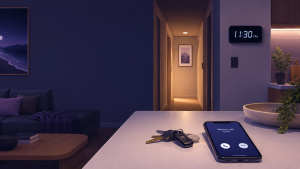
It is 11:30 at night.
Your teenager said they would be home around eleven.
They haven’t answered your call.
And now your mind starts doing what a parent’s mind does exceptionally well: filling the information gap.
Maybe the bus is late. Maybe the phone is on silent. Maybe plans changed. Maybe they simply lost track of time.
Or maybe something is wrong.
This is the uncomfortable territory parents of teenagers live in.
You know your child needs freedom. You also know that freedom does not magically remove risk.
So technology offers an apparently simple solution:
Track them.
See where they are. See where they have been. Keep the little dot on the map permanently available.
It can reduce uncertainty.
But reducing a parent’s uncertainty is not necessarily the same thing as making a teenager safer.
Independence is not a parenting failure
Part of becoming an adult is learning to navigate situations without a parent standing beside you.
Meeting friends.
Catching public transport.
Going to a party.
Walking home from work.
Travelling somewhere unfamiliar.
Making small mistakes and learning how to recover from them.
Autonomy develops throughout adolescence rather than arriving suddenly on an eighteenth birthday. Research has repeatedly treated growing autonomy as a central developmental task of adolescence.
That creates a genuine dilemma.
Parents cannot prepare teenagers for independent adulthood while removing every opportunity to practise independence.
But simply saying, “They need freedom — they’ll be fine,” isn’t much of a safety strategy either. Real risks exist.
The useful question therefore isn’t: “Should I track my teenager or not?”
It is: “What information would actually help if something went wrong — and when should that information become visible?”
That is a very different conversation.
More information isn't always better information
Imagine knowing your teenager’s location every minute of the evening.
You see them leave one house.
Stop somewhere else.
Move again.
Stay stationary for twenty minutes.
What does that tell you?
Possibly something important.
Possibly nothing at all.
A location dot does not tell you whether your teenager feels uncomfortable.
It does not tell you whether someone is pressuring them. It does not tell you whether they need you but don’t want to make an obvious phone call in front of other people, and it does not automatically create a plan for what happens next.
There is an important distinction between surveillance and safety capability.
Surveillance says: “I want to know what you’re doing.”
A safety plan says: “If you need help, we have already agreed how you can get it.”
That distinction matters.
Research into parental monitoring increasingly suggests that how parents monitor matters, not simply how much monitoring occurs. One study found the most favourable adolescent outcomes where high parental monitoring existed alongside strong autonomy support rather than psychological control.
A 2026 study examining teenagers’ attitudes toward covert parental monitoring found another useful nuance: adolescents broadly disliked secretive monitoring, particularly more invasive methods, but viewed monitoring as more acceptable when the situation involved greater genuine risk.
Teenagers, in other words, can understand the difference between: “I don’t trust you.” and “I want you to have backup if you need it.”
Replace the tracking conversation with a safety-plan conversation
1. What is the rough plan?
Where are you going?
Who are you likely to be with?
Roughly when do you expect to be home?
Not because every minute needs to be accounted for, but because somebody should notice when reality moves significantly away from the plan.
2. What counts as “something isn’t right”?
Being twenty minutes late may mean very little.
Missing the last train, failing to arrive at an agreed destination, becoming separated from friends or feeling threatened are different situations.
Agreeing on those distinctions beforehand reduces panic later.
3. How can you ask for help discreetly?
Teenagers will sometimes find themselves in situations where making a dramatic emergency call feels socially difficult, embarrassing or even unsafe.
A good safety system should make asking for help easier, not harder.
MSC, for example, is designed to give teenagers ways to signal for assistance and share relevant location information with people they trust when it is needed. Its existing Location Check concept was created around exactly this tension: allowing parents to “be there” when required without physically accompanying their teenager through every social situation.
4. Who responds?
“Call Mum if anything happens” isn’t always enough.
What if Mum is an hour away?
What if Dad doesn’t hear his phone?
What if an older sibling, aunt, neighbour or family friend is five minutes away?
Safety becomes considerably more practical when there is a small circle of trusted people rather than a single point of failure.
That is the thinking behind a Safety Circle: the teenager isn’t being watched by an audience. They have a defined group of people who can respond if the situation calls for it.
Visibility should have a reason
There are situations where location information is extremely useful.
A teenager asks to be picked up from somewhere unfamiliar.
They’ve become separated from friends.
They send an emergency signal.
They are travelling somewhere alone and want someone to know their route.
Something has happened and a trusted person needs to reach them quickly.
In those moments, knowing where somebody is can be enormously valuable.
But that does not mean the family needs the same degree of visibility every minute of every ordinary day.
MSC’s broader design philosophy is based on this distinction: privacy remains important until circumstances make sharing information necessary for safety. Its personal-use material describes the idea as a protective network that can remain largely dormant until it is required.
That is a healthier model for family safety technology: capability without constant intervention.
The goal isn't to eliminate parental worry
No app can do that.
And any technology promising parents complete certainty about their teenager’s safety should be treated carefully.
Real life doesn’t provide complete certainty.
The goal is something more realistic:
To give teenagers room to build independence while making sure that, if they need help, asking for it is easy and responding to it is fast.
That changes the message a teenager hears.
Instead of:
“I’m watching because I don’t trust you.”
it becomes:
“Go live your life. If something goes wrong, you don’t have to deal with it alone.”
That is a very different kind of safety.
And probably a much better foundation for adulthood.
A better family safety conversation
Before the next night out, talk about:
- the approximate plan rather than every movement;
- situations where your teenager actually wants you involved;
- how they can signal discreetly if they need help;
- which trusted people could respond;
- when location sharing is appropriate;
- and when it isn’t.
Technology should support that agreement. It shouldn’t replace it.
My Safety Circle is built around a simple idea: give people independence when things are normal, and make trusted help easier to reach when things aren’t.